2+ items ship free in the US · 4+ items get 15% off
Couldn't load pickup availability
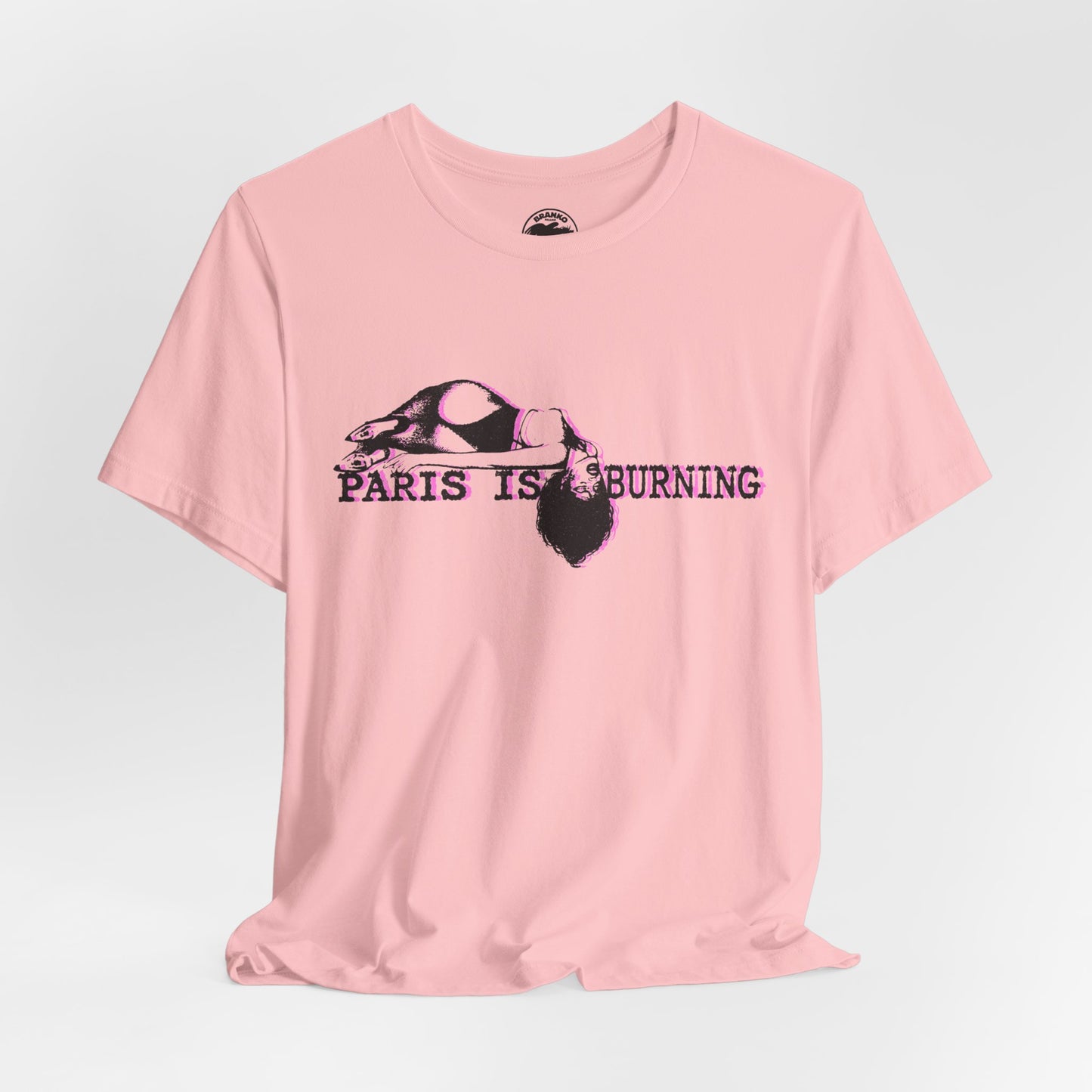
Paris Is Burning — Vintage Press Kit Tee
Few documentaries have left a greater mark on LGBTQ+ culture than Paris Is Burning.
Released in 1990, Paris Is Burning introduced audiences to New York City's underground ballroom scene, documenting the lives of Black and Latino drag queens, transgender women, and queer performers who created vibrant communities through houses, balls, and chosen family.
Directed by Jennie Livingston, the film follows legendary figures including Pepper LaBeija, Dorian Corey, Venus Xtravaganza, Willi Ninja, and Octavia St. Laurent as they speak candidly about identity, race, gender, poverty, survival, and the dreams that sustained them.
For many viewers, Paris Is Burning was the first introduction to ballroom culture and the language it created. Terms and traditions that later entered popular culture—including "voguing," "shade," "reading," and the pursuit of "realness"—were preserved on film through the people who invented and lived them.
More than three decades later, the documentary remains essential viewing. Its influence can be seen everywhere from fashion and photography to music, television, and drag culture, while its subjects continue to inspire new generations of LGBTQ+ artists and activists.
HOMBRE — South Beach, Florida
For much of the 1990s, HOMBRE was one of South Beach's signature gay clubs—sleek, energetic, and unmistakably Miami.
Located in the heart of South Beach during the neighborhood's explosive renaissance, HOMBRE emerged as the city was becoming an international destination for LGBTQ+ travelers. Alongside legendary venues like Warsaw, Twist, and Palace, it helped define an era when Miami Beach was synonymous with world-class nightlife, house music, and endless summer.
The name said everything. HOMBRE embraced a distinctly Latin flavor that reflected Miami itself—confident, sexy, and effortlessly cool. Inside, the soundtrack blended house, tribal, Latin rhythms, and high-energy dance music, while a crowd of locals, tourists, models, artists, and nightlife regulars packed the dance floor well into the morning hours.
Like many of South Beach's great clubs, HOMBRE was about far more than dancing. It was a place to see and be seen, to meet friends from around the world, and to experience the uniquely international atmosphere that made Miami unlike any other American gay destination.
The club belonged to a remarkable period in South Beach history, when Art Deco buildings housed an extraordinary concentration of LGBTQ+ bars, restaurants, cafés, and hotels. During the 1990s, a walk through the neighborhood meant passing one iconic venue after another, each contributing to the city's reputation as one of the world's great queer playgrounds.