2+ items ship free in the US · 4+ items get 15% off
Couldn't load pickup availability
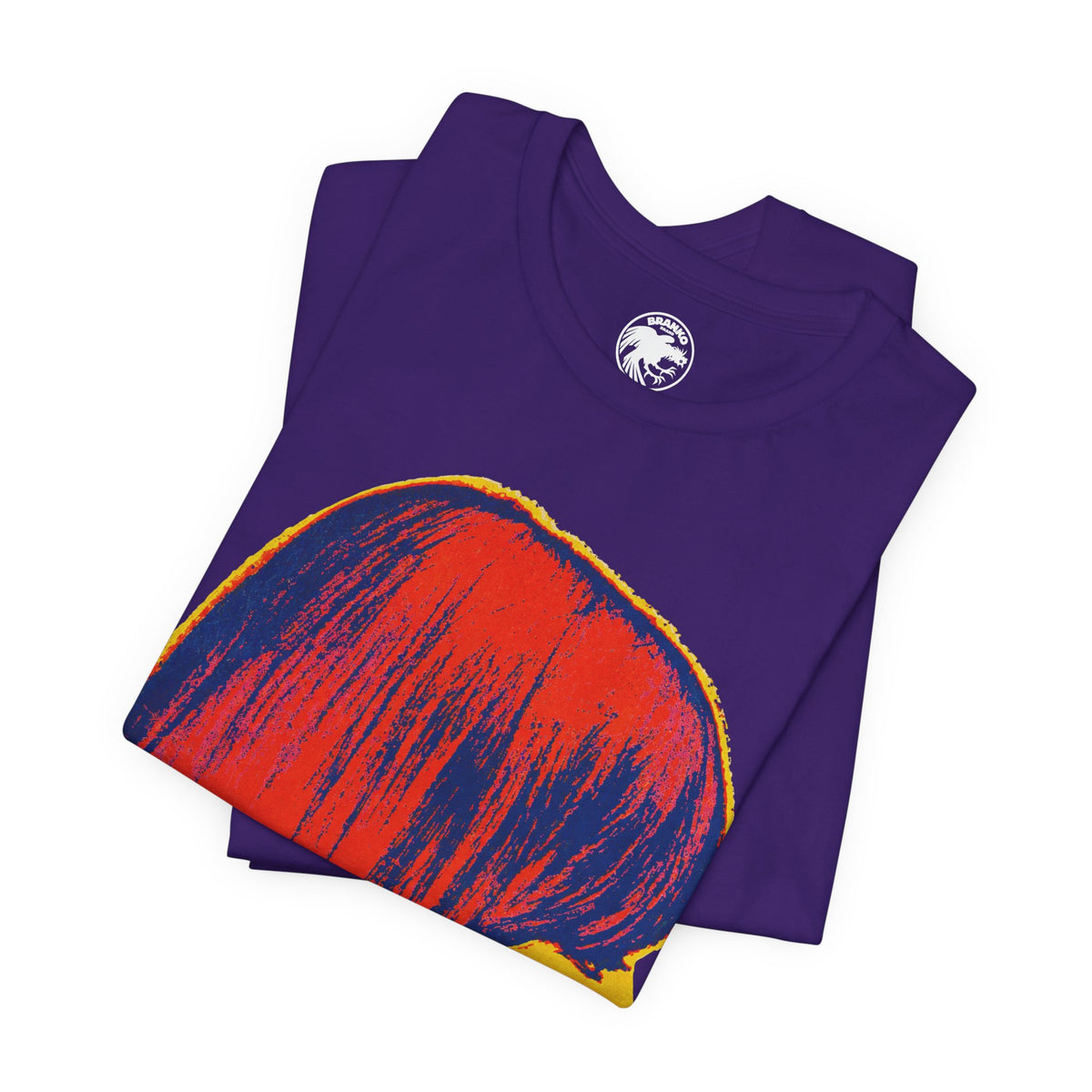
Françoise Hardy — Vintage French Pop Icon Tee
Few women embodied the cool, sophisticated spirit of the 1960s quite like Françoise Hardy. With her long brown hair, striking features, understated style, and beautifully melancholic voice, Hardy became one of France's most beloved singers and an international symbol of effortless Parisian glamour.
Born in Paris in 1944, Hardy emerged during the early 1960s as part of the yé-yé movement, the French pop phenomenon that blended American rock and roll, British beat music, and distinctly European teenage romance.
Her breakthrough came in 1962 with “Tous les garçons et les filles,” a wistful song about loneliness and watching everyone else fall in love. Written by Hardy herself, it became an enormous hit and established her as something rather different from the relentlessly cheerful pop stars of the era.
While other singers were dancing through brightly colored television studios, Françoise often looked as though she'd rather be somewhere else, preferably alone with a cigarette and a complicated romantic situation.
And that was precisely her appeal.
Songs like “Le temps de l'amour,” “Mon amie la rose,” “Comment te dire adieu,” and “La question” showcased her delicate vocals, introspective songwriting, and ability to make heartbreak sound impossibly elegant. She also recorded in English, Italian, and German, becoming one of the few French pop stars to achieve genuine international recognition.
Then there was the fashion.
With her sleek minidresses, tailored trousers, leather jackets, and signature bangs, Hardy became a muse to designers including André Courrèges, Paco Rabanne, and Yves Saint Laurent. Her style was copied around the world, and her combination of androgynous simplicity and understated femininity helped define the look of an entire generation.
She was admired by Bob Dylan, photographed by the era's leading fashion photographers, and appeared in films including Grand Prix (1966). Yet despite her status as an international style icon, Hardy remained famously reserved, often expressing discomfort with celebrity and the machinery of show business.